AI agents for startups: what they can and can't build

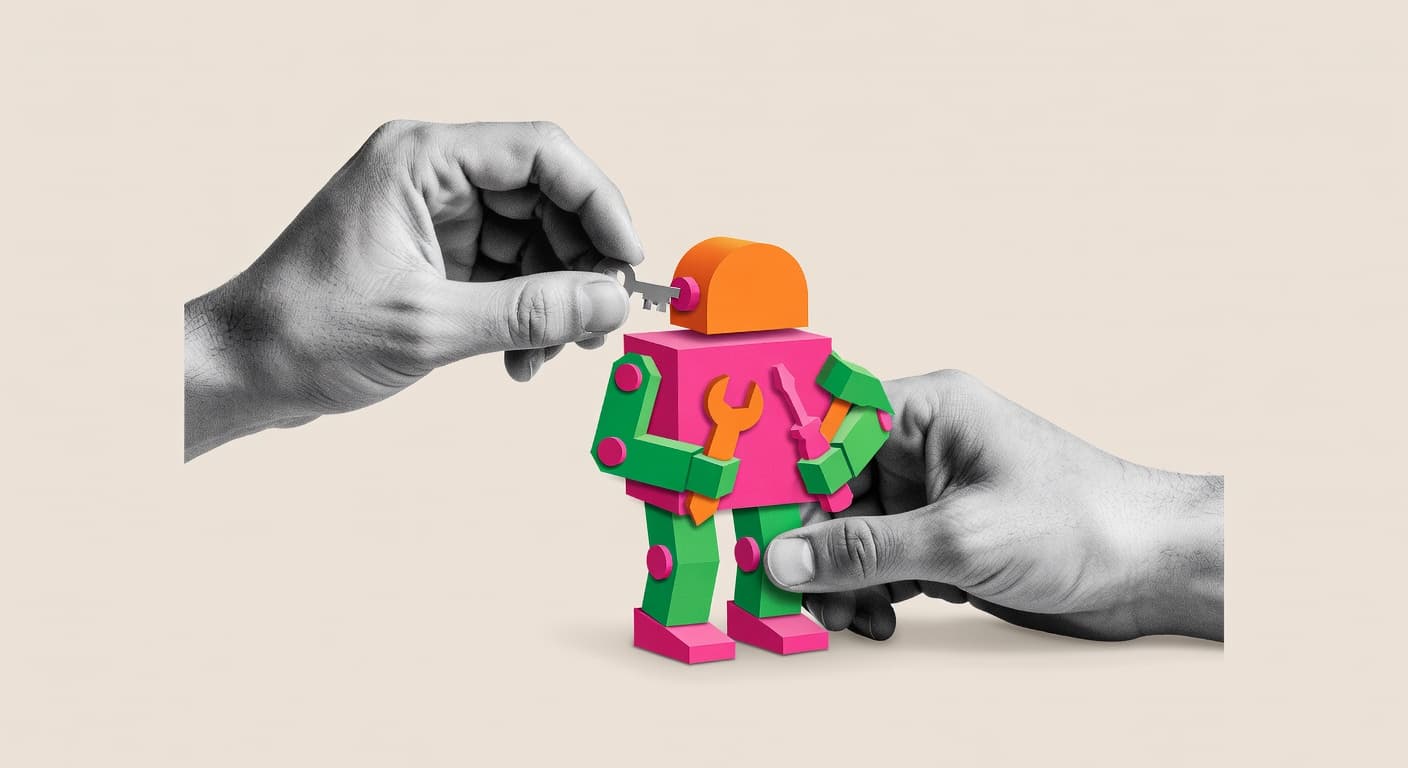
I've been watching founders throw money at AI agents for the past year. Some of them shipped incredible products in days. Others wasted weeks fighting with tools that kept generating broken code and giving up. The difference wasn't the tool. It was knowing what AI agents are actually good at.
So here's my honest take, based on watching dozens of real startups use AI coding agents to build their products. No hype. No doom. Just what works and what doesn't.
What AI agents are genuinely good at
Let me start with the wins, because they're real and they're significant.
Standard SaaS patterns
Auth flows, Stripe billing, user dashboards, CRUD operations, admin panels, settings pages, email notifications. This is the bread and butter of most startups and AI agents absolutely crush it. These patterns have been built thousands of times. The training data is deep. The best practices are well-established.
When you point an AI agent at a SaaS project with a good skill file, the output is genuinely production-ready. I'm talking proper error handling, loading states, type safety, responsive design. The stuff a junior developer would take weeks to get right.
Landing pages and marketing sites
Hero sections, feature grids, pricing tables, testimonials, FAQ sections. AI agents build these faster than any human. Especially when you give them design patterns to follow. The output looks professional because these layouts have clear conventions.
API integrations
Connecting to Stripe, sending emails through Resend, pulling data from third-party APIs. AI agents handle integration work well because API documentation is structured and consistent. Tell the agent which service you want to integrate and it'll wire it up correctly.
Database schemas and migrations
Defining your data models, setting up relationships, writing migrations. AI agents are surprisingly good at this because database design follows logical rules. Describe your business objects and the agent will create a sensible schema.
Where AI agents fall apart
Now for the part nobody in the AI space wants to talk about.
Novel algorithms
If your startup's value proposition depends on a new algorithm that nobody's built before, an AI agent isn't going to invent it for you. It can implement known algorithms flawlessly. It cannot think of new ones. The training data doesn't contain your breakthrough idea.
Complex ML pipelines
Training custom models, building feature pipelines, optimizing inference. These require deep domain expertise and iterative experimentation. AI agents can scaffold the boilerplate around ML work, but the actual model development still needs a human who understands the math.
Highly specialized domains
Healthcare compliance, financial regulation, aerospace safety. Domains where getting it wrong has legal or safety consequences. AI agents don't understand the nuances of HIPAA or SOC 2 compliance. They'll generate code that looks right but misses critical edge cases that only a domain expert would catch.
Distributed systems at scale
If you need your MVP to handle millions of concurrent connections from day one, you're not building an MVP. But even so, designing distributed systems with proper consensus, fault tolerance, and partition handling is beyond what current AI agents do well.
The skill file difference
Here's what I've noticed makes the biggest gap between founders who succeed with AI agents and those who don't: instructions.
When you open Claude Code and type "build me a SaaS," you get generic code. It works in a demo. It falls apart in production. Missing error states, no loading indicators, sloppy file structure, hardcoded values everywhere.
When you open Claude Code with a SaaS Builder skill file, you get the architecture patterns from apps that are already live and making money. The agent follows specific conventions for file naming, component structure, error handling, and deployment. The output is dramatically different.
It's the same agent. The difference is context. A skill file is like handing a talented but inexperienced developer the internal wiki of a company that's shipped 50 products. Suddenly they're not guessing. They're following a proven playbook.
What this means for your startup
If your startup fits into recognizable patterns—and most do at the MVP stage—an AI agent with good skill files will get you to launch faster and cheaper than any other option. I've seen it happen dozens of times now. Founders going from idea to paying customers in under a week.
If your startup depends on something genuinely novel, use AI agents for the 70% that's standard (auth, billing, UI) and put your human effort into the 30% that's unique. That's still a massive efficiency gain.
The mistake I see most often is founders who assume AI agents can do everything or nothing. Reality is somewhere in the middle, leaning heavily toward "a lot more than you'd expect" when you give them proper instructions.
How to get started
If you're building a SaaS product, the SaaS Builder skill is where most founders start. It covers auth, billing, dashboards, and deployment patterns that work out of the box.
Not sure if your idea fits the pattern? Take the skill finder quiz and find out in 60 seconds.
Frequently Asked Questions
Can an AI agent build a full SaaS product for my startup?
Yes, for standard SaaS patterns. Auth, billing, dashboards, CRUD operations, admin panels—an AI agent with a good skill file handles all of this at production quality. Where agents struggle is genuinely novel functionality that nobody has built before. For the vast majority of MVP features, they deliver.
What types of startups benefit most from AI agents?
SaaS products, marketplaces, internal tools, landing pages, and content platforms. Anything that follows established software patterns. If you can describe your product by saying "it's like X but for Y," an AI agent will build it well.
How much money can a startup save using AI agents?
Most founders save $10k to $40k compared to hiring an agency or freelancer. A skill file costs $29 and Claude Code runs about $20/month. Your total build cost for a typical MVP lands under $100 versus $15k to $30k the traditional way.
Do I need a technical co-founder if I use AI agents?
Not for the MVP stage. Many of our most successful users are non-technical founders who had never opened a terminal before. You'll want technical help as you scale past your first 100 customers. But for validating the idea and getting those first customers, an AI agent with skill files is enough.